What Is Low-Density Living? Why 95 Villas on 30 Acres Matters
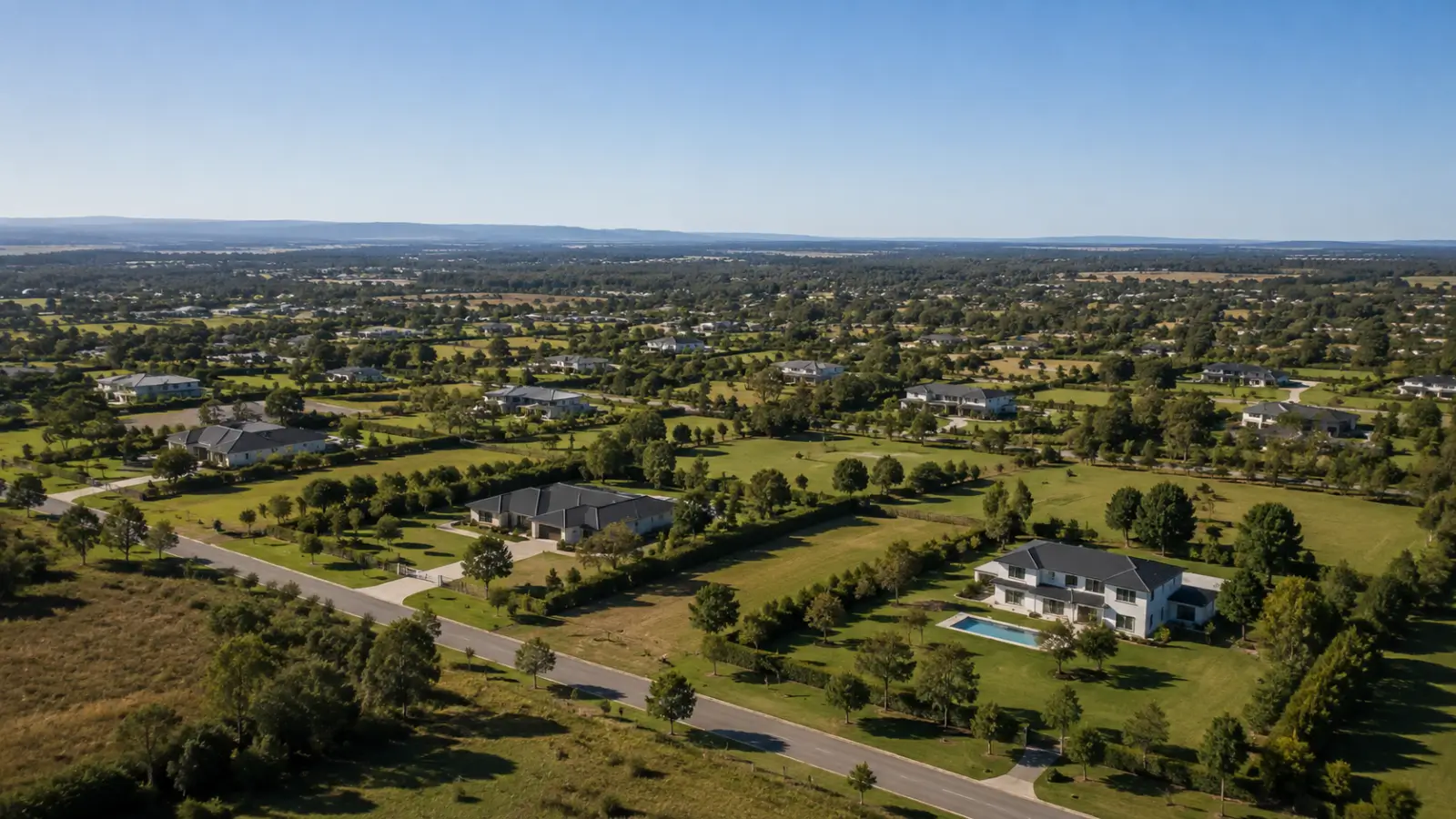
Embassy Eden offers true low-density villa living with just 95 homes across 30 acres, creating generous green spaces, privacy, spacious layouts and exclusive amenities.
What is low density villa living, stripped of the marketing? It is a ratio, and here the ratio is 95 homes across roughly 30 acres - about three villas an acre. Every quality buyers associate with the format follows from that single number rather than from any feature a developer can add later.
The Number Behind the Number
Density is easy to claim and hard to fake, because one figure gives it away: floor area ratio. Permitted FAR at this site is 2.50. The proposal uses 0.583 - under a quarter of what the rules allow. Ground coverage lands near 31,622 sq m against 1,28,081 sq m of land, roughly 25%. A developer could have built four times as much here legally. Choosing not to is what you are actually paying for.
What Gets Left Unbuilt
Roughly three-quarters of the parcel. Green cover runs to about 45,722 sq m with around 1,600 trees planned. Parks take 14,631 sq m across six pockets from 720 sq m to 5,500 sq m. Internal roads occupy 27,439 sq m along a hierarchy that steps from 12 m to 9 m to 6 m. Civic amenities take another 6,395 sq m. None of that is amenity in the brochure sense; it is space, which is a different commodity.
Low Density Villa Living Benefits, Concretely
Four that survive scrutiny. Setbacks are wide because there is room for them, so the distance to your neighbour is a design decision rather than a compromise. Streets narrow as they approach homes, which drops speed without a speed breaker. Green sits within a short walk of most plots rather than pooled at the boundary. And shared facilities divide across 95 households, so a 250 sq m pool is usually free.
The Privacy Focused Villa Community Argument
Privacy at this density is structural rather than decorative. A privacy focused villa community achieves it through plot size, setback and street layout - not through taller boundary walls, which is what denser projects resort to. Each home here sits on its own plot with a garden wrapping it, a terrace that belongs to the household rather than to a committee, and a maid's room with a separate entrance so staff circulation stays clear of family circulation.
Why It Cannot Be Retrofitted
Here is the point most buyers miss. Density is fixed at sanction - 16 May 2025 in this case, under BDA plan 06/2025-26 - and cannot be raised later without a fresh approval process. Amenities get value-engineered between launch and handover; unit counts do not. A buyer at plot 40 in 2031 finds the same arithmetic a buyer sees on the drawing today, which is why the FAR figure is worth more than any render.
The Costs Nobody Lists
Low density is expensive and the bill arrives twice. First at purchase: land per household is high, which is why pricing starts from Rs 25 crore. Then at maintenance: 95 households share the running cost of 27,439 sq m of roads, six parks, a 1,568 sq m clubhouse and a 150 KLD treatment plant. Fewer families means a larger share each. That is the honest inverse of everything above.
What It Is Not
Low density does not mean rural, and it does not mean isolated. Stonehill International School sits about 1.5 km away, the Padukone-Dravid Centre for Sports Excellence roughly a kilometre, and Kempegowda International Airport about 17 km with no central crossing. What it does mean is a drive to retail - Yelahanka at about 8 km - and hospitals at 15-17 km. Space and convenience trade against each other; there is no version where both win.
Testing It
Stand on a plot and count the roofs you can see. That single observation conveys density more honestly than any figure, including 0.583. Then do the same at a project quoting similar rates at double the FAR, and the difference becomes obvious in about ninety seconds. Our team will arrange both walks - we would rather you judged with your feet than with a brochure.
How to Spot Real Density
Every project claims spacious. Three numbers settle it, and they are all public. FAR consumed against FAR permitted - here 0.583 against 2.50. Homes per acre - here about three. Ground coverage as a share of the parcel - here roughly 25%. What is low density villa living reduces to those three figures, and a developer unwilling to quote all three is telling you the answer without saying it.
Then check they are sanctioned rather than proposed. Density fixed on a sanctioned plan cannot rise without fresh approval; density described in a brochure can change quietly between launch and handover. Ask for the plan number and the date - 06/2025-26, dated 16 May 2025 - and check the figures against it rather than against the marketing.
Related Articles

Bangalore, GCC Capital: What It Means for Property Investors
Bangalore's GCC expansion is boosting North Bengaluru through leadership hiring, airport connectivity and sustained housing demand, making Bettahalasuru attractive for long-term villa investment.

Bangalore Smart City Initiatives & Their Real Estate Impact
Bangalore's smart city impact is driven by completed infrastructure, not announcements. North Bengaluru benefits from the airport, metro construction and road connectivity.
The Airport Economy: How KIA Is Reshaping North Bangalore
Bangalore Airport is driving North Bengaluru's growth through jobs, infrastructure and housing demand. Bettahalasuru benefits from this expanding airport economy, making it a strategic residential location.

How Bangalore's IT Boom Keeps Driving Real Estate Demand
Bangalore's IT boom continues to shape North Bengaluru through employment, airport-led growth and diversified industries, strengthening long-term housing demand around Bettahalasuru.