
Bangalore's smart city impact is driven by completed infrastructure, not announcements. North Bengaluru benefits from the airport, metro construction and road connectivity.
Bangalore smart city real estate impact is best assessed with one filter: has earth been moved? Announced initiatives have a poor completion record across this city and an even worse record on timelines. Land prices absorb announcements immediately and buyers pay for them immediately, whether or not the thing ever arrives. Separating the two is the only useful skill here.
What Is Actually Being Built
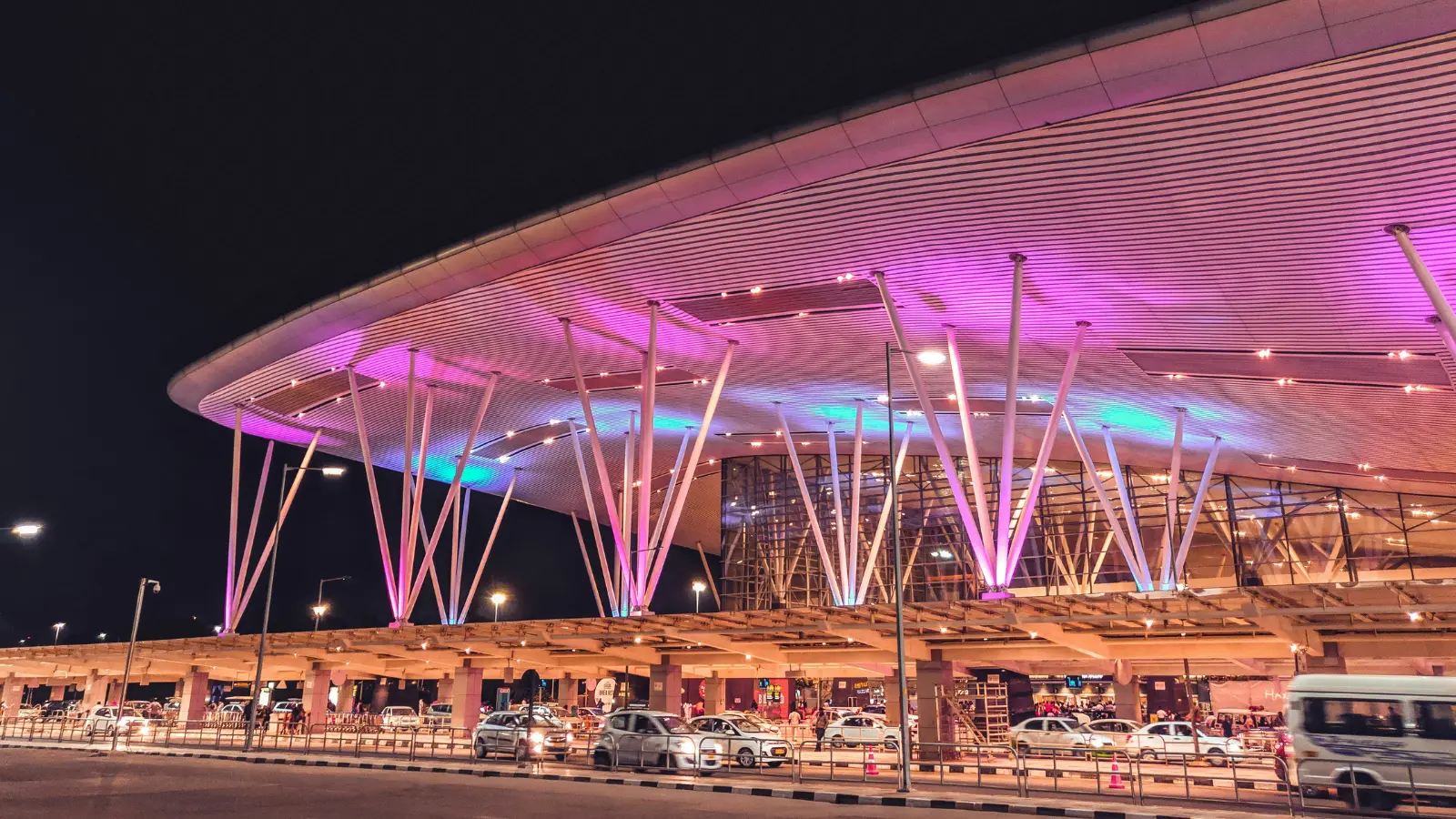
Three things in the northern corridor, and only three deserve weight. Namma Metro's Blue Line to Kempegowda International Airport runs through this belt with the Doddajala stop on the alignment - under construction rather than approved. Terminal 2 has already widened airport capacity, which is delivered rather than pending. The Satellite Town Ring Road connects Doddaballapur, Devanahalli and Hoskote, progressing in sections.
Why Rail Matters Most
Roads can be widened, rerouted or congested into uselessness. A station cannot move. That permanence is why metro progress reprices land in a way another lane on Bellary Road never would. The pattern repeats across cities: land moves on alignment confirmation, then again on commissioning. Yelahanka has absorbed part of the first, leading North Bengaluru on year-on-year appreciation in 2026 at roughly 21.5%.
Smart City Projects Bangalore Announces
Treat most with patience. Digital governance, sensor networks, traffic management and utility upgrades all appear in smart city projects Bangalore publicises, and their effect on residential land values is genuinely modest. A dashboard does not change a commute. What changes a commute is a metro line, a grade-separated corridor or a ring road, and those are civil engineering rather than software.
Infrastructure Development Bangalore Should Be Judged By
Four tests, applicable to any claim. Is construction visible on the ground? Does a published alignment or route exist rather than a concept? Has funding been allocated rather than proposed? And does it change a trip somebody actually makes daily? Infrastructure development Bangalore genuinely benefits from passes all four. Most announcements pass none, and get priced into land anyway.
The Northern Corridor's Position
Unusually good, on those tests. An international airport that has already expanded. A metro line being physically built through the belt. Beside it, a ring road progressing. Employment arriving at Devanahalli Business Park at about 17 km from Bettahalasuru and the KIADB Aerospace Park at 20-22 km. That combination is concrete rather than conceptual, which is why the corridor outperformed - villa rates ran from roughly Rs 4,200 a sft in 2019 to about Rs 12,000.
What Is Still Missing
Healthcare, and no smart city initiative addresses it. Hospitals sit 15-17 km from Bettahalasuru - Manipal at Doddaballapur around 15 km, Aster CMI at Hebbal roughly 16-17 km - with no committed facility closer. Retail density remains thin, so groceries mean a drive to Yelahanka at about 8 km. Those gaps may close as population arrives; nothing currently under construction closes them.
How to Weigh an Unbuilt Line
Discount it without ignoring it. A sensible position treats the metro as upside rather than as the basis of the purchase: buy because road access, school catchment and scarcity work today, and treat rail as the thing that improves the position around handover in December 2031. Buyers who purchase on infrastructure promises alone have a poor record in this city. Those who ignore committed infrastructure entirely have missed most of its gains.
The Practical Rule
Track completion milestones rather than press releases, and check the source rather than the hoarding - alignment and station positions come from Bangalore Metro Rail Corporation Limited rather than from any developer, ours included. Then buy a project that works on today's access. Everything else is a bonus you did not pay for, which is the only comfortable way to hold infrastructure exposure.
The Announcement Discount
Here is the mechanism nobody explains. Bangalore smart city real estate impact often arrives before the infrastructure does, because land prices absorb announcements immediately. Which means a buyer purchasing after an announcement has already paid for a benefit that may take a decade to arrive, or may not arrive at all. The developer captured that value; the buyer carries the timing risk.
Which argues for a specific discipline: buy on delivered infrastructure, and treat the announced pipeline as free optionality. Terminal 2 is delivered. Bellary Road is grade-separated and working. Schools stand at 1.5 to 7 km. Those justify the purchase today. The metro improves it later, and you should not be paying much for the improvement.
A Test for Any Corridor
Ask what the address would be worth if nothing further were built - no metro, no new roads, no additional employment. If the answer is roughly what you are paying, the purchase is sound and the pipeline is upside. Where the answer is materially less, you are buying a forecast rather than a home, and forecasts in this city have a mixed record on timing even when they are right on direction.
Related Articles

Bangalore, GCC Capital: What It Means for Property Investors
Bangalore's GCC expansion is boosting North Bengaluru through leadership hiring, airport connectivity and sustained housing demand, making Bettahalasuru attractive for long-term villa investment.

Inside the Embassy Eden Clubhouse: Amenities for 95 Homes
Embassy Eden's clubhouse is designed for just 95 villas, offering spacious amenities, a pool, parks and wellness facilities with low crowding and walkable access.
The Airport Economy: How KIA Is Reshaping North Bangalore
Bangalore Airport is driving North Bengaluru's growth through jobs, infrastructure and housing demand. Bettahalasuru benefits from this expanding airport economy, making it a strategic residential location.

How Bangalore's IT Boom Keeps Driving Real Estate Demand
Bangalore's IT boom continues to shape North Bengaluru through employment, airport-led growth and diversified industries, strengthening long-term housing demand around Bettahalasuru.