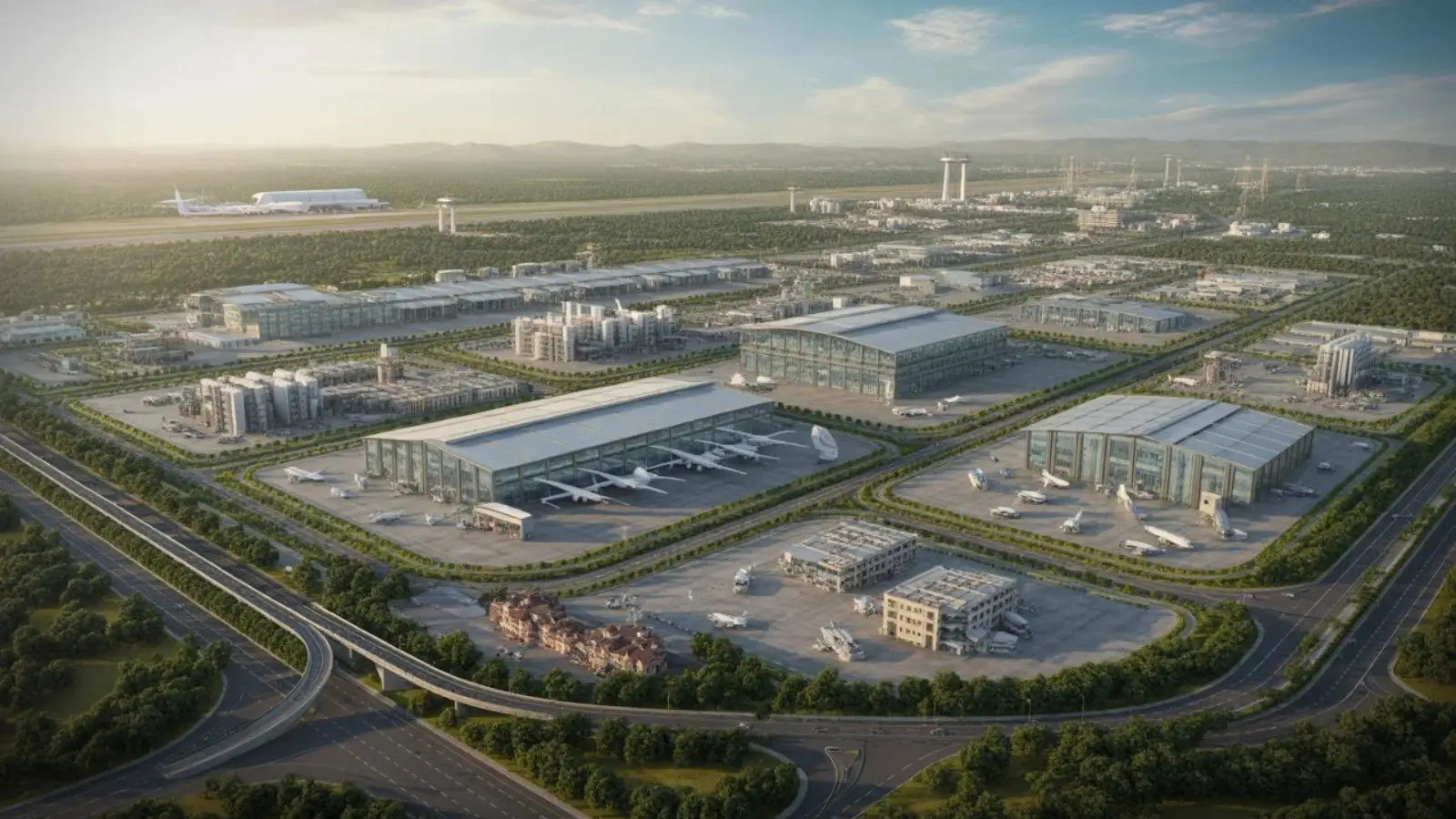
North Bengaluru's aerospace and SEZ corridor drives long-term real estate growth through employment, business parks and sustained housing demand near the airport.
The North Bangalore SEZ aerospace corridor is the least discussed reason this belt has repriced, which is odd given it is the most durable. Airports generate attention. Metro lines generate headlines. Employment generates residents, and residents are what actually support land values across a decade.
What Sits There
The KIADB Aerospace Park and the associated Devanahalli SEZ form an industrial and employment zone adjacent to the airport, roughly 20-22 km from Bettahalasuru. Devanahalli Business Park sits closer at about 17 km. Together with the wider ITIR designation, they draw aerospace manufacturing, logistics, supporting industry and the global capability centres that have moved north over the past decade.
Why Aerospace Specifically
Location logic rather than policy alone. Aerospace manufacturing needs runway access for obvious reasons, large contiguous land for assembly, and a supply chain that clusters physically. An international airport with land around it answers all three, which is why aerospace park employment Bangalore has concentrated here rather than distributing across the city. That clustering is self-reinforcing - suppliers follow assemblers.
Devanahalli SEZ Jobs and What They Pay
Composition matters more than headcount for a villa buyer, and this is the part worth understanding. Aerospace and logistics management roles, engineering positions and global capability centre leadership pay at levels that support Grade-A housing. Low-wage industrial employment moves land values far less. Devanahalli SEZ jobs skew towards the former, which is why villa yields in this belt hold at roughly 3.5-4% of property cost semi-furnished despite ticket sizes that would collapse yields elsewhere.
The Distance Question
Proximity is good; adjacency is not, and the distinction is worth checking on any project claiming an employment story. A villa 20-22 km from an aerospace park captures the demand without the freight movement, the noise or the industrial traffic. One at 2 km captures all four. Bettahalasuru sits far enough to stay quiet and close enough to matter, which is doing real work in the arithmetic rather than in the brochure.
What It Produced
Villa rates across the airport belt moved from roughly Rs 4,200 a sft in 2019 to about Rs 12,000 now. Devanahalli ran from around Rs 5,500 a sft in 2020 to Rs 11,000-13,000 in 2026. Yelahanka led North Bengaluru on year-on-year appreciation in 2026 at roughly 21.5%. Employment is the mechanism underneath all three figures - terminals generate traffic, not tenancy.
The Diversification Argument
Bengaluru's eastern corridor is technology-weighted almost exclusively, which concentrated its exposure to one industry's cycle. The northern belt carries aerospace, logistics, the airport economy and technology together. That mix does not make it downturn-proof, and nothing is. It does spread the exposure across industries that do not all contract in the same quarter, which is a structural difference worth something to a ten-year holder.
What Could Go Wrong
Two things, named honestly. Aerospace is capital-intensive and cyclical - order books swing, and manufacturing employment swings with them. And SEZ policy is policy, which means it can change; the fiscal framework that attracted occupiers is not a permanent feature of the landscape. Neither is predicted. Both belong in a ten-year view rather than being edited out of one.
What to Track
Hiring rather than hoardings, and occupancy rather than allotment. Land announcements are cheap and frequent; payroll is neither. Watch which companies actually take space at the aerospace park and Devanahalli Business Park, and at what seniority. A corridor filling with decision-makers reprices differently from one filling with warehouses, and rents reveal the difference long before headlines do.
Why Manufacturing Employment Behaves Differently
One distinction worth carrying. The North Bangalore SEZ aerospace corridor employs people in physical facilities that cost a fortune to build and cannot be relocated in a quarter. That is the opposite of a technology delivery centre, which can shift work between geographies with notice periods rather than capital write-offs. Sticky employment supports housing demand differently from mobile employment.
It also creates a longer supply chain locally - assemblers attract component suppliers, who attract logistics, who attract services. That clustering is self-reinforcing and slow to unwind. For a buyer holding to 2036, employment that is physically embedded in the ground twenty kilometres away is worth more than the same headcount in leased office space.
Reading the Corridor's Composition
Ask what proportion of the belt's employment is senior. Aerospace park employment Bangalore hosts spans assembly-floor roles through to engineering leadership, and only part of it supports a Rs 25 crore villa market. The corridor's Grade-A housing demand rests on the top slice plus the global capability centre leadership that flies weekly - a narrower pool than the headline employment numbers suggest, and worth understanding before you extrapolate from them.
Related Articles

Bangalore, GCC Capital: What It Means for Property Investors
Bangalore's GCC expansion is boosting North Bengaluru through leadership hiring, airport connectivity and sustained housing demand, making Bettahalasuru attractive for long-term villa investment.

Bangalore Smart City Initiatives & Their Real Estate Impact
Bangalore's smart city impact is driven by completed infrastructure, not announcements. North Bengaluru benefits from the airport, metro construction and road connectivity.
The Airport Economy: How KIA Is Reshaping North Bangalore
Bangalore Airport is driving North Bengaluru's growth through jobs, infrastructure and housing demand. Bettahalasuru benefits from this expanding airport economy, making it a strategic residential location.

How Bangalore's IT Boom Keeps Driving Real Estate Demand
Bangalore's IT boom continues to shape North Bengaluru through employment, airport-led growth and diversified industries, strengthening long-term housing demand around Bettahalasuru.