
Explore North Bangalore real estate trends in 2026, driven by infrastructure, employment, limited land supply and strong demand across the airport corridor.
North Bangalore real estate market trends 2026 point one direction, and the interesting question is why rather than whether. Yelahanka led the zone on year-on-year capital appreciation at roughly 21.5%. Devanahalli sits at Rs 11,000-13,000 a sft. Villa rates across the airport belt have moved from about Rs 4,200 a sft in 2019 to around Rs 12,000. Those numbers are consistent enough to suggest structure rather than sentiment.
The Rate Map
Dispersion across the belt tells you where the market has concentrated. Yelahanka apartments range roughly Rs 6,500-13,000 a sft. Devanahalli occupies Rs 11,000-13,000, having run from about Rs 5,500 in 2020 - a compound rate near 13.5% with roughly 19.8% in the most recent year. Jakkur sits near Rs 9,000. Bagalur, further out, nearer Rs 4,000. The spread has widened rather than closed, which is what happens when infrastructure lands unevenly.
What Is Driving It
Four forces, all of them structural. Terminal 2 widened airport capacity, anchoring the corridor permanently. Namma Metro's Blue Line to the airport is under construction rather than announced. The Satellite Town Ring Road adds regional connection across Doddaballapur, Devanahalli and Hoskote. And the KIADB Aerospace Park, Devanahalli Business Park and a wave of global capability centres have moved employment north, which is the force that converts the other three into housing demand.
The Bangalore Property Market 2026 Backdrop
Wider Bengaluru is forecast at roughly 10-12% price growth in 2026, with the airport corridor expected to run ahead of the city average. That gap is the whole thesis for buying north rather than elsewhere. It is also the thing most likely to compress: outperformance attracts supply, and supply eventually meets demand. Watch launch volumes in the belt as closely as you watch prices.
Supply, the Asymmetry
The city produces premium apartments at scale and plotted development at scale. What it produces very little of is large-format villa communities on 30-acre parcels inside the airport belt, because that land is largely gone. Scarcity at the top of the market explains why villa rates trebled while apartment rates roughly doubled, and it is unlikely to ease - you cannot manufacture a 30-acre parcel eight kilometres from a school belt.
Yelahanka Devanahalli Market Outlook
The two behave differently and buyers should not treat them as one market. Devanahalli carries township-scale land still arriving, which means choice, competitive pricing and the risk that today's view becomes tomorrow's project. Yelahanka and the belt around it are closer to built out, with a settled social base - schools standing, not promised. Expect Devanahalli to offer the earlier entry point and Yelahanka to offer the lower variance.
What Could Change the Picture
Three things. Metro delivery slipping would delay the second repricing that rail usually triggers. A supply surge at Devanahalli could absorb demand that currently concentrates closer in. And a broader Bengaluru correction would not spare this corridor simply because its fundamentals are sound. Growth from a low base also flatters percentages, and the belt now works off a materially higher one.
Reading the Trend Properly
Treat 2026's numbers as evidence of direction rather than a forecast of magnitude. The corridor has employment at both ends, an international airport in the middle, rail under construction and almost no large parcels left. That combination supports continued growth without promising a rate. Anyone modelling the next decade at 20% a year is modelling fiction, and anyone modelling zero is ignoring the map.
The Signals Worth Tracking
North Bangalore real estate market trends 2026 will be revised by 2027, so track leading indicators rather than reading last year's headline. Watch launch volumes across the belt, because supply is what caps outperformance. Track hiring at the aerospace park and Devanahalli Business Park, because employment is what sustains demand. And watch metro construction milestones, because rail is the one variable capable of repricing the corridor a second time.
Ignore three things. Land announcements without earth moving. Township launches marketed on infrastructure that has not started. And any forecast quoting a single annual percentage for a belt where Bagalur sits near Rs 4,000 a sft and Devanahalli at Rs 11,000-13,000. The dispersion is the story; the average conceals it.
What a Buyer Should Take From This
The corridor's fundamentals are unusually legible: an airport that has already expanded, employment at both ends of the belt, rail under construction, and almost no large low-density parcels remaining. That combination supports continued growth without guaranteeing a rate. Buy on the structure and hold long enough for it to work, rather than buying on a percentage that will not repeat.
Related Articles

Bangalore, GCC Capital: What It Means for Property Investors
Bangalore's GCC expansion is boosting North Bengaluru through leadership hiring, airport connectivity and sustained housing demand, making Bettahalasuru attractive for long-term villa investment.

Bangalore Smart City Initiatives & Their Real Estate Impact
Bangalore's smart city impact is driven by completed infrastructure, not announcements. North Bengaluru benefits from the airport, metro construction and road connectivity.
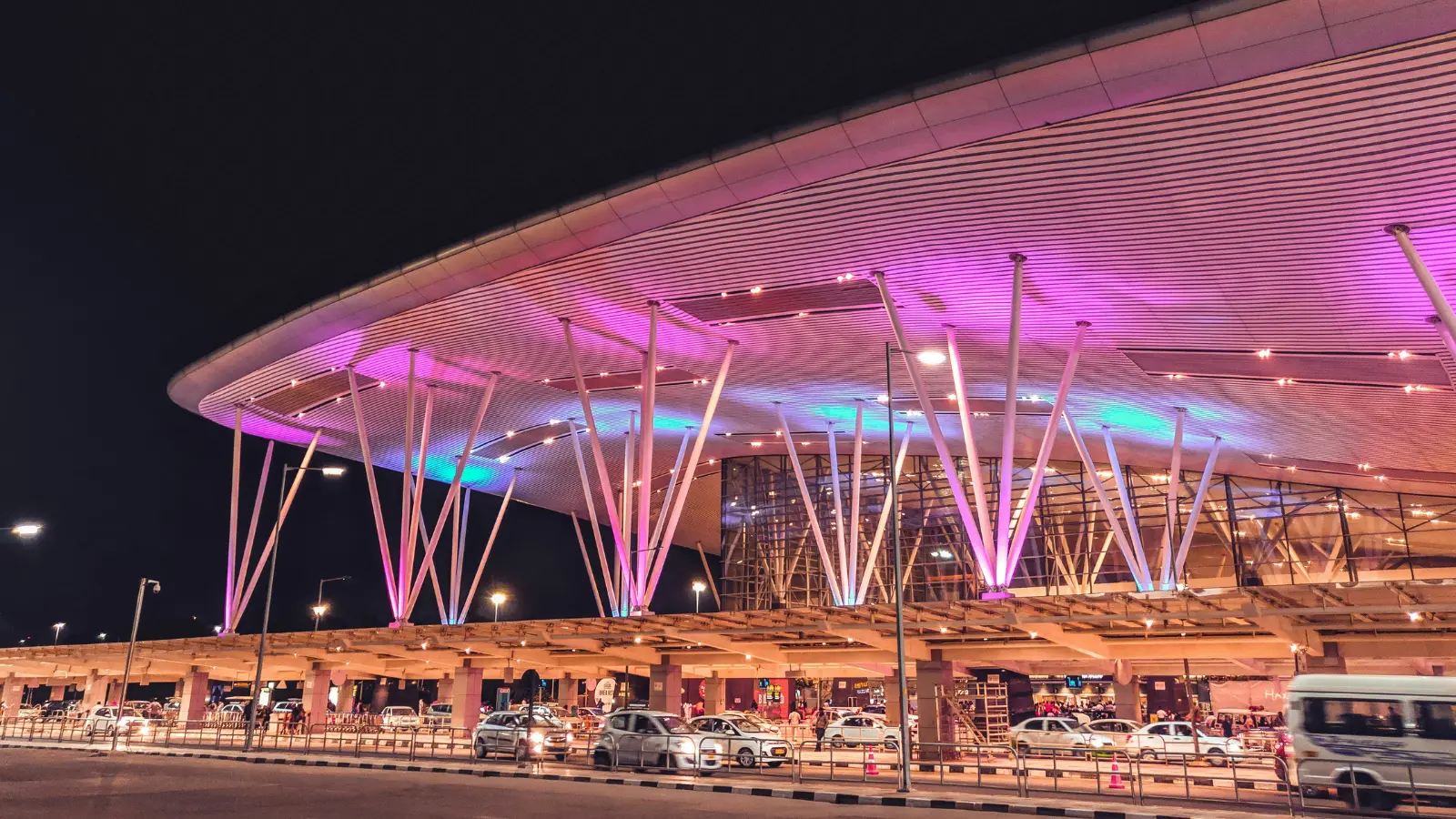
The Airport Economy: How KIA Is Reshaping North Bangalore
Bangalore Airport is driving North Bengaluru's growth through jobs, infrastructure and housing demand. Bettahalasuru benefits from this expanding airport economy, making it a strategic residential location.

How Bangalore's IT Boom Keeps Driving Real Estate Demand
Bangalore's IT boom continues to shape North Bengaluru through employment, airport-led growth and diversified industries, strengthening long-term housing demand around Bettahalasuru.