
Evaluate Embassy Eden's 2026 investment potential through land scarcity, appreciation, rental yield, developer track record, risks and long-term return assumptions.
Assessing Embassy Eden investment potential 2026 honestly means separating what can be verified from what has to be assumed. Verifiable: 95 villas across roughly 30 acres, FAR 0.583 against a permitted 2.50, a closed approval stack, and pricing from Rs 25 crore. Assumed: everything about 2031 and beyond. A serious case names both halves.
The Three Verifiable Pillars
Scarcity comes first and it is the strongest argument. A developer holding 30 acres inside the airport belt could have subdivided into 300 plots; 95 was chosen and sanction on 16 May 2025 made that irreversible. Corridor momentum comes second - Yelahanka led North Bengaluru on year-on-year appreciation in 2026 at roughly 21.5%, and villa rates across the belt moved from about Rs 4,200 a sft in 2019 to around Rs 12,000. Timing comes third: handover is proposed for 31 December 2031, after much of the corridor's infrastructure matures.
Embassy Eden ROI Analysis: The Two Components
Return here arrives in two forms and they behave differently. Capital appreciation is the engine, driven by land scarcity in a belt where large parcels have gone. Rental yield is the offset - roughly 3.5-4% of property cost annually semi-furnished, 4-4.5% furnished, which on a Rs 25 crore villa implies about Rs 7.3-9.4 lakh monthly gross. Net of maintenance, vacancy and tax, rent covers holding costs rather than generating returns.
What the Land Component Does
At about three homes an acre, the land share of the purchase is unusually high for a residential asset, and that is the mechanism the whole case rests on. Land appreciates; structures depreciate. Any luxury villa investment Bangalore offers at a comparable rate but a higher FAR is selling you more concrete on less ground, and the two will diverge over a twenty-year hold even if they price identically today.
The Developer Variable
Execution risk is the largest single unknown on a five-year build, and the promoter's record is the only available proxy. Embassy Group has built since 1993 with over 100 million sft delivered or managed. The listed platform, Embassy Developments Limited, trades as EMBDL and 532832 with an IVR A- (Stable) rating from Infomerics, which means quarterly filings any buyer can read. Embassy Boulevard offers a completed, sold-out villa precedent in the same belt.
The Risks, Stated
Five. Handover sits in 2031 and five-year programmes slip despite escrow protection under Section 4. Metro delivery dates have moved before. Liquidity at a Rs 25 crore ticket is thinner than at Rs 2 crore, so exit takes longer and costs more. Embassy Developments Limited carries the legacy balance-sheet transition of its predecessor entities, which prospective buyers should review in the latest quarterly filing. And pricing from Rs 25 crore is market-quoted rather than a published rate card.
Who This Works For
A buyer with a ten-year horizon, no need for the capital in between, and a use case beyond the spreadsheet. Households who will live in the villa capture the land appreciation and the garden simultaneously, which is the format's actual proposition. Pure investors optimising for return per rupee should look at commercial property or smaller residential units, where yields are better and exits are faster.
The Test
Ask whether you would still buy if appreciation ran at 8% rather than 20%. If yes, the case holds on scarcity and use. Where the purchase only works at the higher rate, it is a geared bet on a corridor rather than a home, and there are cleaner ways to take that position.
Modelling It Conservatively
Run the Embassy Eden investment potential 2026 case at three appreciation rates rather than one, because a single number is a guess dressed as analysis. At 8% annually, land value roughly doubles across a decade and the purchase works on scarcity and use. Raise it to 12%, closer to the corridor's forecast outperformance, and it works comfortably. At 20%, which is what 2026 delivered in Yelahanka, it looks extraordinary - and nobody should plan on it.
Then subtract what the model usually omits. Five years of capital committed with no return before handover. Maintenance from 2031 onward on a 7,000-9,000 sft house with a garden. Transaction costs at both ends. Tax on rent and on eventual gains. The case survives all of that at 8%; it survives comfortably at 12%. Anything requiring 20% to work is not a case.
The Comparison Nobody Runs
Ask what the same Rs 25 crore does elsewhere. Commercial property yields better and appreciates less. Equities are liquid and volatile. A REIT gives you real estate exposure with none of the illiquidity or the garden. The villa wins on one axis the others cannot touch: you live in it while it appreciates. Buyers who value that capture a return no spreadsheet records. Anyone who does not should probably buy the REIT.
Related Articles

Bangalore, GCC Capital: What It Means for Property Investors
Bangalore's GCC expansion is boosting North Bengaluru through leadership hiring, airport connectivity and sustained housing demand, making Bettahalasuru attractive for long-term villa investment.

Bangalore Smart City Initiatives & Their Real Estate Impact
Bangalore's smart city impact is driven by completed infrastructure, not announcements. North Bengaluru benefits from the airport, metro construction and road connectivity.
The Airport Economy: How KIA Is Reshaping North Bangalore
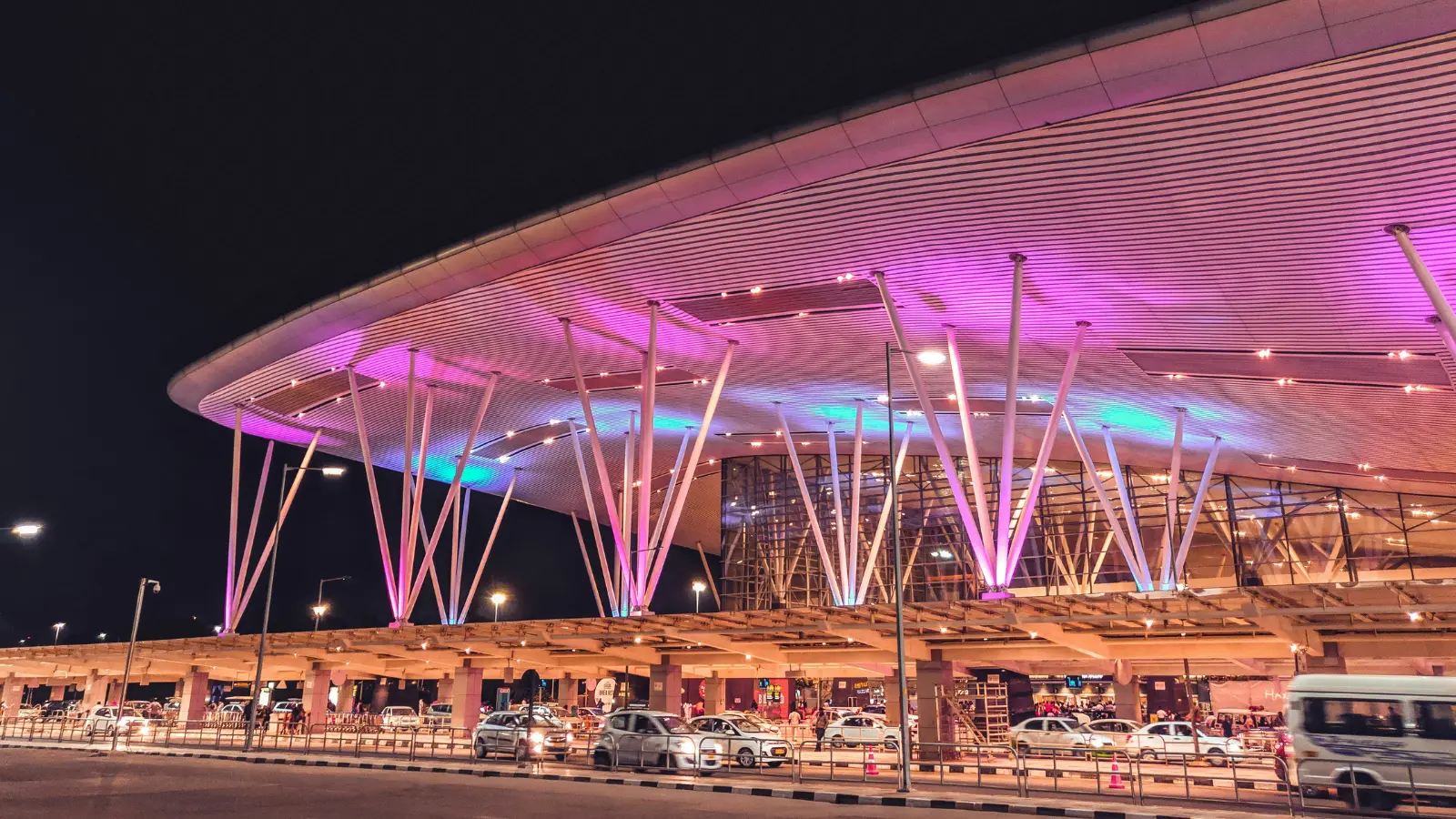
Bangalore Airport is driving North Bengaluru's growth through jobs, infrastructure and housing demand. Bettahalasuru benefits from this expanding airport economy, making it a strategic residential location.

How Bangalore's IT Boom Keeps Driving Real Estate Demand
Bangalore's IT boom continues to shape North Bengaluru through employment, airport-led growth and diversified industries, strengthening long-term housing demand around Bettahalasuru.