
Understand Embassy Eden's construction-linked payment plan, booking process, escrow safeguards, RERA protection and key payment stages, so you know how instalments align with construction progress.
A payment plan is a risk-allocation document dressed up as an instalment table. Embassy Eden payment plan options follow a construction-linked schedule rather than a time-linked one, and that single distinction decides who carries the risk of a slow programme. Money moves as the building does, not as the calendar does. On a five-year build to a proposed 31 December 2031 completion, that matters more than any discount.
Construction-Linked Versus Time-Linked
Under a time-linked plan you pay on dates regardless of what has been built. Switch to a construction-linked plan and each instalment attaches to a stage - foundation, framing, finishing - so a promoter who slows down collects later. Incentive alignment is obvious once stated, and it is why the structure has become the default at this end of the market. Here, the Embassy Eden construction linked plan follows that logic against a programme that began on 31 January 2026.
What the Embassy Eden Booking Amount Secures
The booking amount secures a specific plot, and at three homes an acre across 95 villas that is the substantive thing being bought. Plot dimensions shift by position rather than repeating one rectangle, and 58 homes take Type A while 37 take Type B. Corner, spine and cluster interior positions each behave differently on aspect, privacy and price. Securing the plot is therefore not an administrative step - it is the decision itself.
The Sequence
An expression of interest registers you against the inventory without committing you. Plot selection follows, ideally after a site visit rather than before one. The booking amount then secures the chosen plot. An agreement for sale executes under Rule 8A of the Karnataka rules in compliance with Section 13 of the Real Estate (Regulation and Development) Act, 2016. Instalments follow the construction stages from there to handover.
The Escrow Protection Underneath
Section 4 of the Act requires seventy percent of amounts realised to sit in a separate escrow account, drawn only against construction and land cost. That is what stops your instalment funding a different project. Combined with quarterly status filings on the Karnataka RERA portal - due within fifteen days of each quarter's end against registration PRM/KA/RERA/1251/472/PR/311225/008368 - you get both a financial ring-fence and an independent progress record.
Questions Worth Asking
Four. Which stage triggers each instalment, defined precisely rather than loosely? What interest applies on delayed payments, and is the reciprocal obligation on the promoter symmetrical? Which charges sit outside the plan entirely - GST, stamp duty and registration attach to the transaction rather than the villa? And what happens to the schedule if the programme slips past 31 December 2031? Get those answers in writing before you sign.
Mapping It To Your Own Cash Flow
Ask our team to lay the payment plan against the construction programme on a single page so you can see the cash flow across five years rather than infer it. On a Rs 25 crore villa, the timing of instalments is a material financial decision in its own right, and it deserves the same scrutiny as the price.
How to Compare Two Payment Plans
Plans differ in ways that headline percentages hide. Run three checks. What proportion falls due before the structure is topped out, since front-loading transfers risk to you? How precisely is each trigger defined - 'on commencement of finishing' means little without a definition, and vagueness favours whoever wrote it. And is the interest clause symmetrical, charging you for late payment at the same rate the promoter pays for late delivery?
Asymmetry on that third point is common across the market and worth challenging. The Act provides for compensation where a promoter fails to hand over on the agreed date, but the specific mechanics live in your agreement for sale rather than in the statute. Read them, and get any ambiguity resolved in writing before signing rather than after.
The Cash Flow Nobody Models
On a Rs 25 crore purchase across five years, the timing of instalments carries real financial weight independent of the price, which is why Embassy Eden payment plan options deserve as much scrutiny as the rate. Capital committed early stops earning elsewhere. Money committed late may need liquidating from an appreciated position with tax consequences. Buyers routinely negotiate hard on price and accept the schedule as given, which gets the priority backwards. Ask our team to map the plan against the construction programme on one page, then run it past whoever handles your tax position before you commit.
Related Articles

Bangalore, GCC Capital: What It Means for Property Investors
Bangalore's GCC expansion is boosting North Bengaluru through leadership hiring, airport connectivity and sustained housing demand, making Bettahalasuru attractive for long-term villa investment.

Bangalore Smart City Initiatives & Their Real Estate Impact
Bangalore's smart city impact is driven by completed infrastructure, not announcements. North Bengaluru benefits from the airport, metro construction and road connectivity.
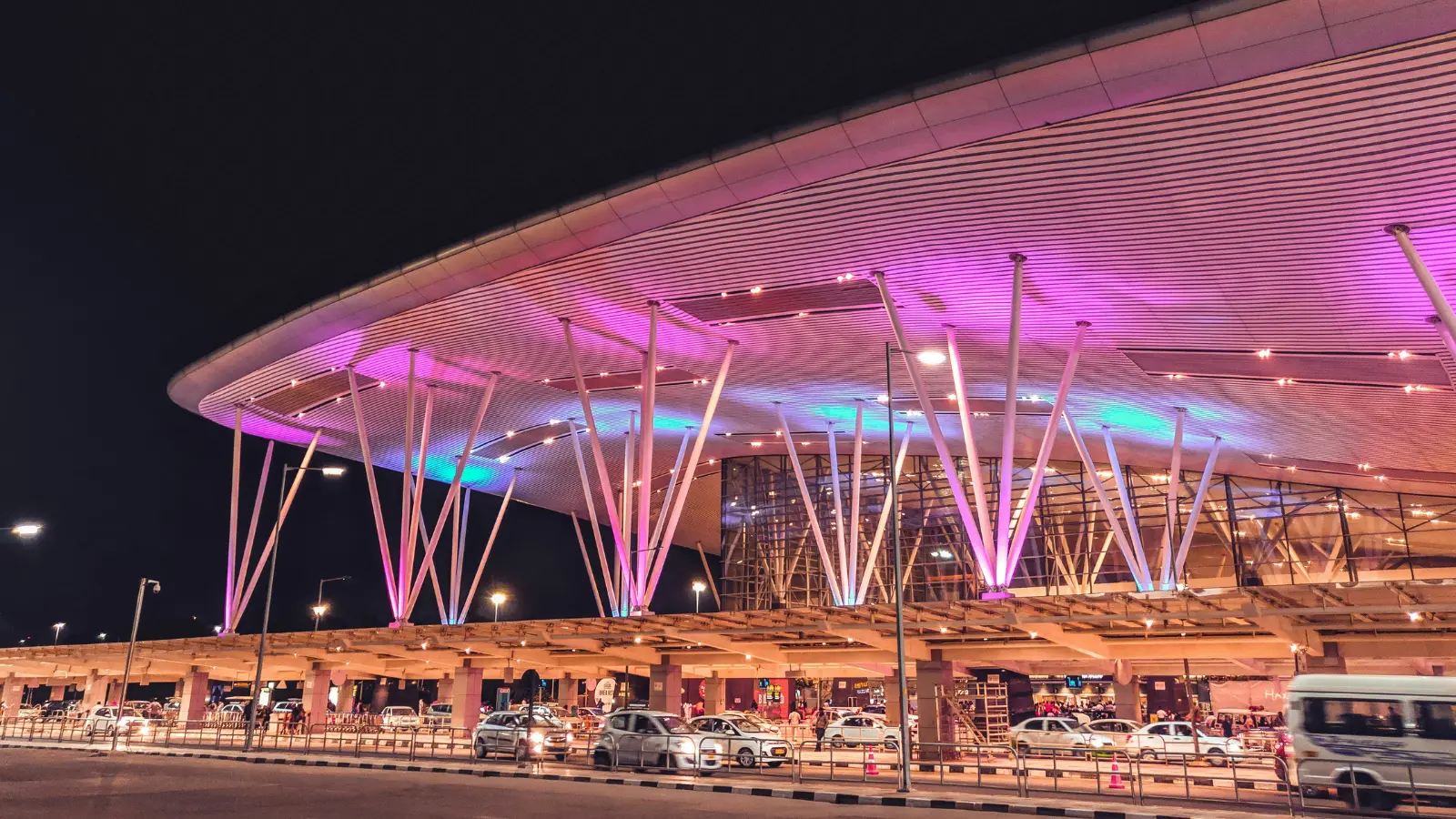
The Airport Economy: How KIA Is Reshaping North Bangalore
Bangalore Airport is driving North Bengaluru's growth through jobs, infrastructure and housing demand. Bettahalasuru benefits from this expanding airport economy, making it a strategic residential location.

How Bangalore's IT Boom Keeps Driving Real Estate Demand
Bangalore's IT boom continues to shape North Bengaluru through employment, airport-led growth and diversified industries, strengthening long-term housing demand around Bettahalasuru.